Week 1 – Why Gesture and Contour Drawings Are the Only Two Exercises You Need Right Now
Exercise Spice: 1/5 🌶️ (easy peasy)
Caffeine Consumption: 3/5 ☕️☕️☕️
Focus Drift: 4/5 🙄🙄🙄🙄
Aha! Moment: 3/5 💡💡💡
Materials: pencil and papers.
The goal: wonky drawings are desirable for contour exercises. 👏🙃🤓👍 Wonky lines mean your eyes were glued to the reference model, not your paper.
When I started to draw, I went into shading, rendering, and making a pretty picture. But gesture and contour drawing train the two very important skills that every artist needs before anything else: to feel the motion, the spirit, the intention, and the lines and curves.
Gesture teaches you to capture the energy and movement while contour force your brain to slow down and see the details that you don’t see before. Master these two, and every other drawing technique becomes much easier.
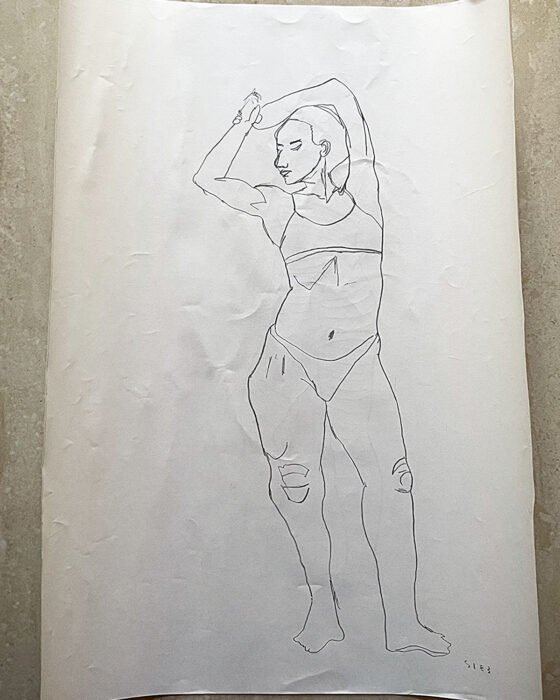
The excruciating contour drawing.
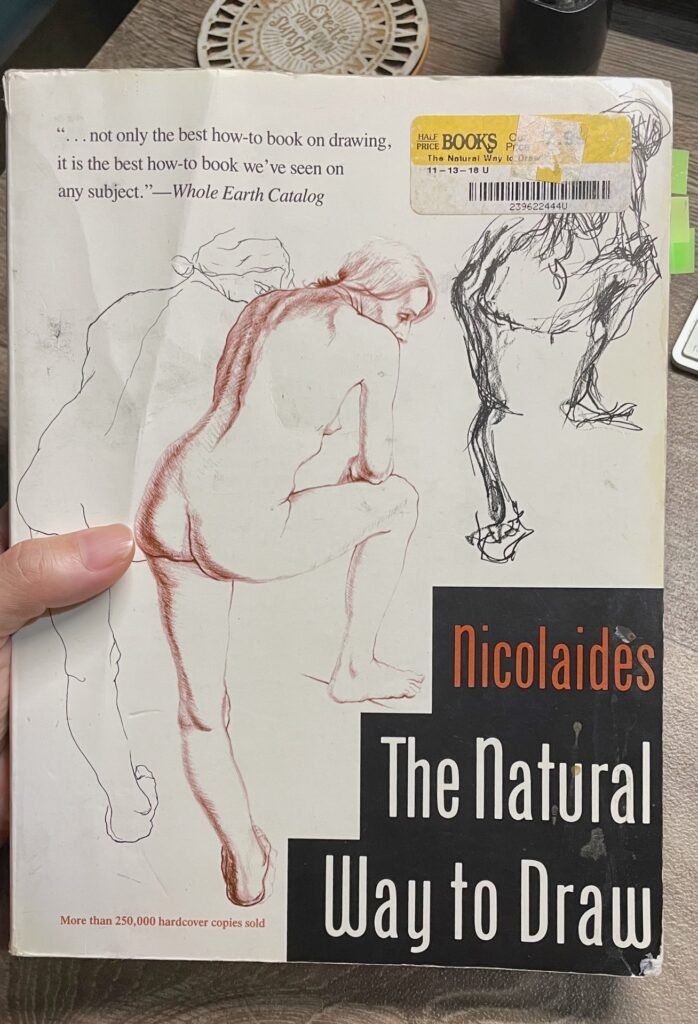
The exercises themselves are easy enough to take up and draw. But the extreme slowness of drawing was brutal and torturous. I could easily finish one contour drawing in a couple of minutes, but the instruction in the book “The Natural Way to Draw,” which is our holy bible in this drawing challenge, plainly stated that one drawing is one hour. It was quite impossible to be honest; I managed to draw around 14 minutes per drawing. I’m talking about snail speed, perhaps slower than a snail. You’ve got to try it yourself to find out how calm and zen you’ll need to be to draw that slow. I mean, even ants were faster! I thought if the fast-paced social media video scrolling had brought me to this speed-craving mind, I couldn’t slow down even if I tried. The overstimulation and fast pace of the video contents excite my brain. I read the book “Dophamine Detox” by Thibaut Meurisse and wondered if I should follow the steps to “detox” my brain before I carry on the challenge.
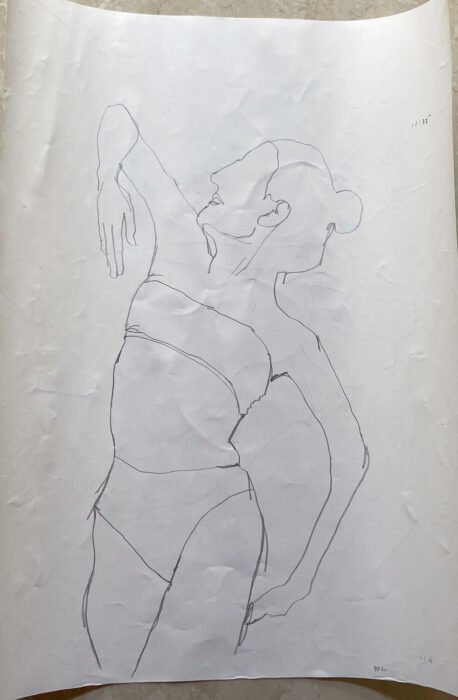
The Aha! Moment
For contour drawing, I recommend using a bigger screen, like a computer monitor instead of a phone screen, to zoom in so the figure size is a similar size to your paper. My art reference photos are high resolution with professional studio lighting that makes edge detail crisp, and fully clothed/family-friendly so you can draw anywhere. If the whole figure doesn’t fit in the screen, after you zoom in to the size you need, you can scroll the photo down as you draw. This has helped me to draw longer, as I can see more details. For gesture drawing, it doesn’t matter as much; the quick pace forces you to see the whole figure and draw, so you’ll naturally enlarge or reduce the size of the figure on your page.
Cross-contour lines can be tricky to figure out at first. One trick that helped me is wrapping elastic bands around a clear water glass, then tilting and turning the glass to match the angle of the body part I’m drawing. It gives you an instant visual for the basic direction of the cross-contour lines. From there, you just have to observe the subtle nuances as you draw—and like anything else in this challenge, the more you do it, the more natural it becomes.
About the Challenge
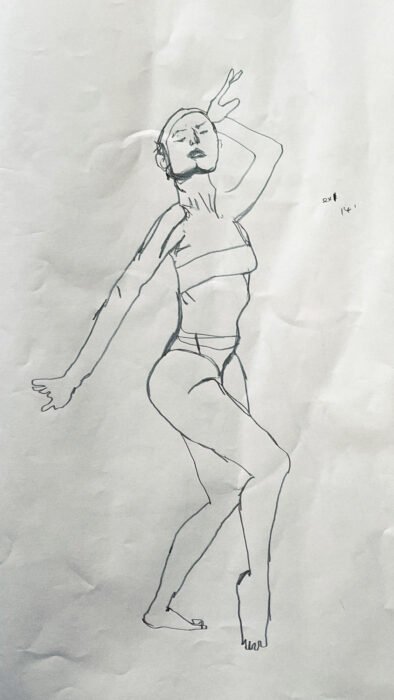
I created The 25-Week Drawing Challenge because I couldn’t get past Schedule 1 of Nicolaides’ original book “The Natural Way To Draw”. It was exhausting! By scaling it down to 1 hour a day and shooting my own high-resolution dancer reference photos, I finished all 25 weeks—and even landed my first gallery exhibition!
If I can teach myself to draw starting at 43, you can too. You don’t need 3 hours a day—just 1 hour, a pencil, and the right setup.
🎁 Try Week 1 for Free: Grab the Week 1 reference pack and daily routine guide over on Patreon! [Hit “Join for Free” Here]